Interviewer - What did April 25 mean in 1974 and what it still means for the Portuguese people?
Noa - I think that in 1974 meant mainly a time and change and conquest, there was a rather
important change, we conquered the right to freedom of expression and even politicians and
today means the pride we have for the action of resistance and also means that we remember,
as the song "Grândola Vila Morena" says, that really the people are in charge and if we think
something is wrong we have the power to change.
Interviewer - …and at that time we really managed to conquer something that did not exist at the
time that was freedom of expression, is not it? And regarding life, do you know what life was like back then, before April 25, 1974? What was happening then and what has changed since then from the moment we had the revolution?
Salvador - I think people’s lives were very limited, there was fear and people were very
concerned about what they could say and think, if it was not in accordance with what the State
was wanting to do and even in their work they had to be careful what they were told what to
do with their co-workers or even bosses, if they were doing something against the State, were
always worried, it was a very worried life, they were afraid to do a lot of things.
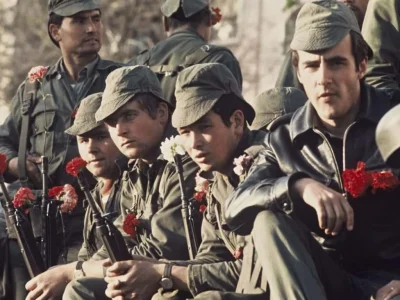
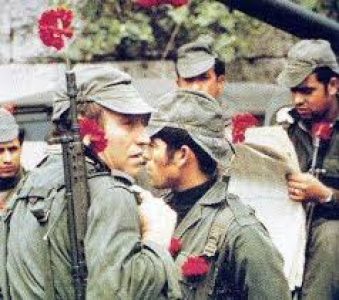
I think it has to do with Peace, with Freedom. The weapons are a symbol of war, of
violence, and when the people put the nails in the barrel, at the tip of the guns, the rifles, it
was a symbol that the people wanted peace, they just wanted their freedom of expression,
which I believe is what we all want.
Interviewer - What was the role of the resistance in the fall of the dictatorship in 1974? What
do you think happened and why? What was the importance of the Portuguese resistance?
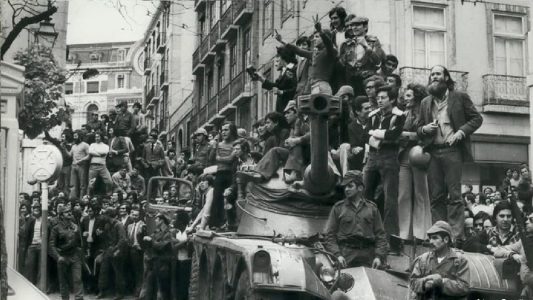
Miguel - The resistance had a very important role because it was the main factor for the
revolution, the gathering of the people. I think it was the main piece for the revolution to take
place so that rights were acquired.
Violante ... the fundamental and most basic rights of every Portuguese citizen. Therefore,
resistance means that, resisting those who oppressed, those who did not let each of us be who
we actually were.